Quick answer: When a pool heater will not fire up or stops heating, the usual culprits are simple: low water flow from a dirty filter, no gas or power reaching the unit, a tripped safety switch, or hard-water scale choking the heat exchanger. A few of these you can check yourself in a couple of minutes. Anything involving gas, electrical parts, or an internal component is a job for a licensed tech, both for your safety and to protect the warranty on an expensive piece of equipment.
Here in Riverside, a heater matters more than people think. Our evenings cool off fast once fall rolls in, and plenty of homeowners want to stretch the swim season into spring. So when the water goes cold right before a weekend, it is frustrating. This guide walks through the seven reasons a pool heater usually quits, what you can safely check on your own, and how our local hard water plays a bigger role than most owners realize.
Start With a Few Safe Checks
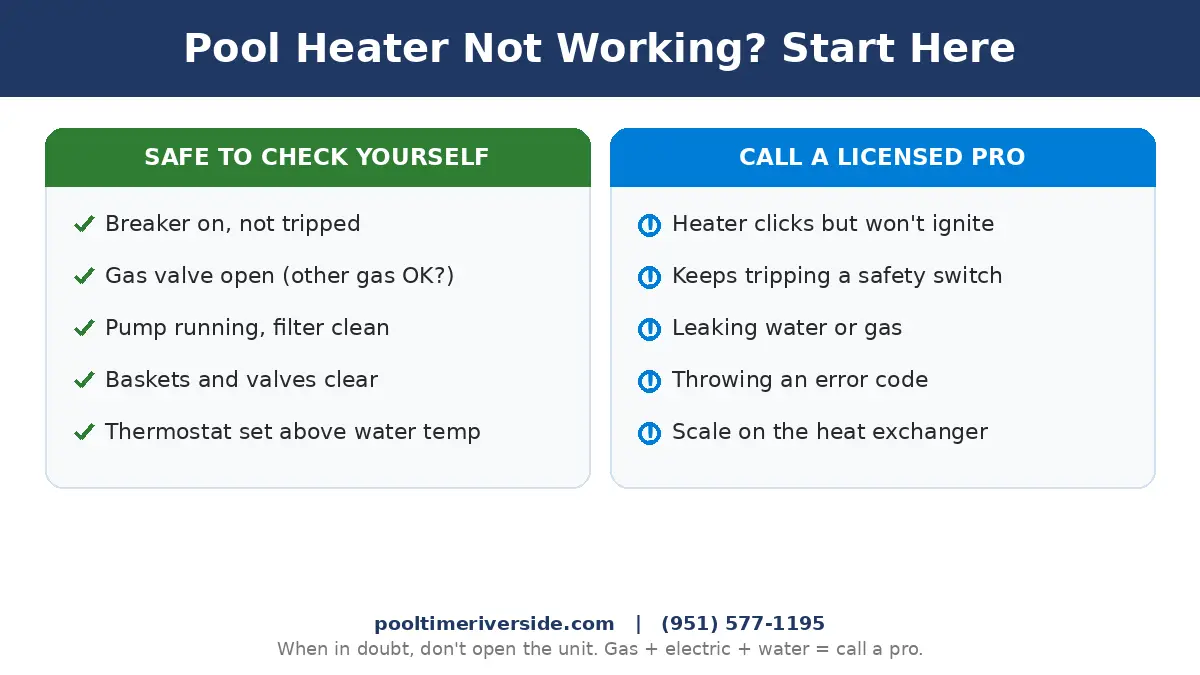
Before you assume the worst, run through the basics. Plenty of “dead” heaters are just a heater that is not getting what it needs to run. None of these steps involve opening the unit or touching gas or electrical parts.
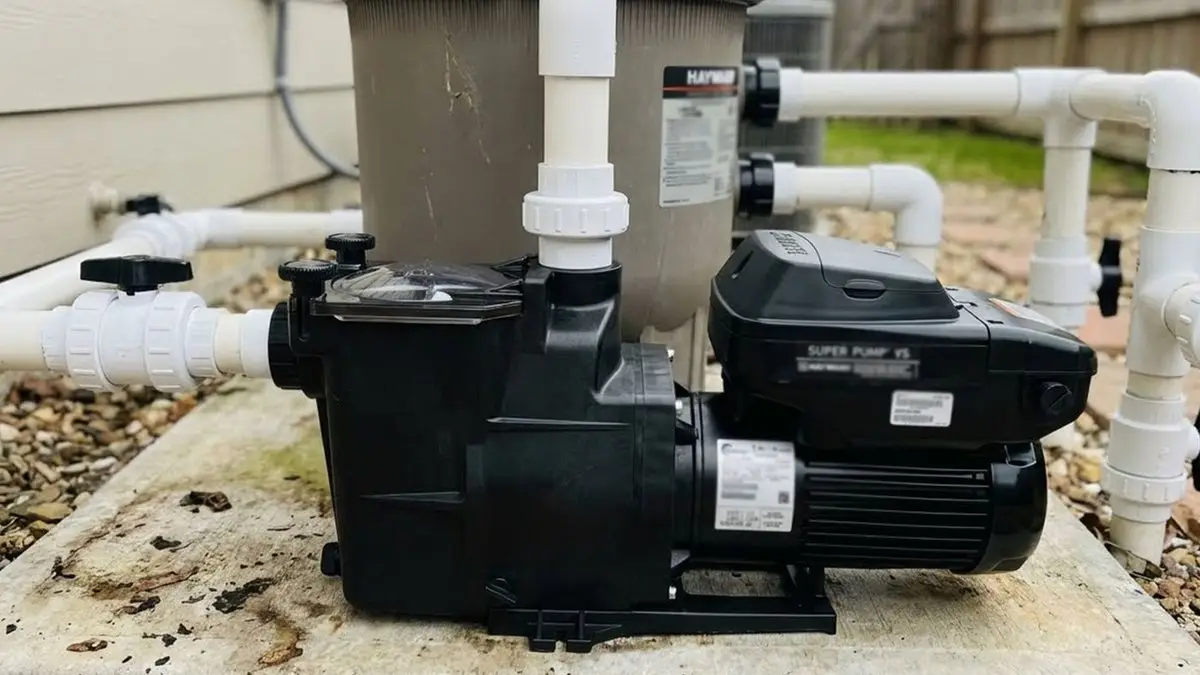
First, confirm the heater actually has power and gas. Check that the breaker has not tripped and, on a gas unit, that the gas valve is open and other gas appliances in the house are working. Next, look at your filter and pump. A heater needs strong water flow to fire, so if your filter is dirty or the pump is running weak, the heater may refuse to start as a safety measure. Make sure the pump is running, the baskets are clear, and the filter pressure looks normal. Finally, check the thermostat setting and mode. It sounds obvious, but a heater switched to the wrong mode, or set below the current water temperature, will simply sit there doing nothing. If all of that looks right and the heater still will not heat, one of the problems below is likely the reason.
7 Common Reasons a Pool Heater Stops Working
Most heater failures come down to one of these seven issues. Some are quick fixes, others need a technician, but knowing what you are looking at helps you have a smarter conversation when you call.
1. Low water flow. This is the number one cause we see. Heaters have a flow sensor that stops the unit from firing if water is not moving fast enough. A clogged filter, a dirty pump basket, closed valves, or a weak pump all starve the heater of flow. Clean the filter and clear the baskets first, and if the pump itself is the problem, that points to pump repair.
2. No ignition. If you can hear the heater trying to start but it never catches, the ignition system may be failing. Dirty or corroded igniters, a bad flame sensor, or a faulty control board all show up as a heater that clicks and gives up. This one needs a technician.
3. Gas supply problems. A gas heater with a closed valve, low pressure, or an issue at the meter will not heat, even though everything else looks fine. If other gas appliances are also acting up, the problem is upstream of the pool. If it is just the heater, the gas line or valve to the unit needs a look.
4. A tripped safety switch. Heaters have high-limit and pressure switches that shut the unit down when something is wrong, like overheating or low flow. Sometimes the switch trips for a real reason and sometimes the switch itself has failed. Either way, it is a signal that something needs attention rather than a simple reset.
5. Scale on the heat exchanger. This is the Riverside special, and we cover it in detail below. Hard-water minerals build up inside the heat exchanger, block the flow of heat into your water, and make the unit work harder until parts start to fail.
6. A failing heat exchanger or corrosion. The heat exchanger is the heart of the heater. Years of unbalanced water, low pH, or scale can corrode it or crack it. A leaking exchanger often means a major repair, and on an older unit it can tip the scale toward replacement.
7. Age and electronics. Control boards, sensors, and thermostats wear out. On a heater more than ten years old, an electronics failure is common, and finding parts for an older model can get harder and pricier every year.
Why Riverside’s Hard Water Is Tough on Pool Heaters
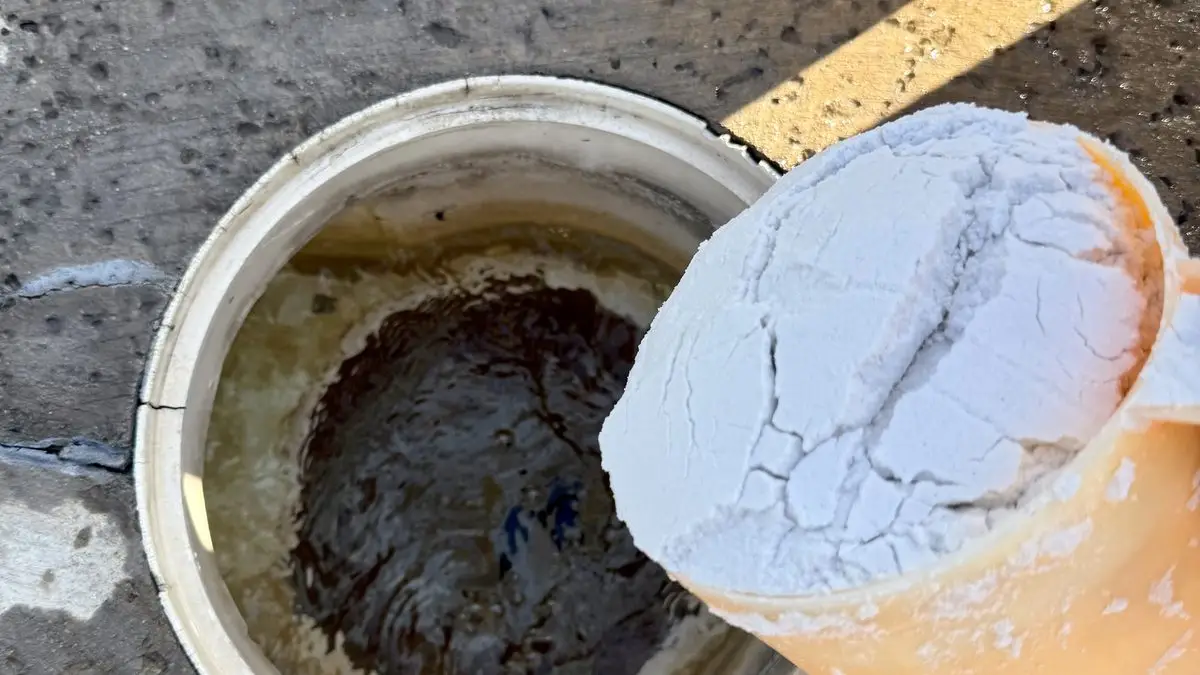
Riverside sits in some of the hardest water in Southern California, and heaters take the brunt of it. Here is what happens. As water passes through the heat exchanger and warms up, dissolved calcium comes out of solution and deposits on the metal as scale, the same chalky buildup you see on your tile. That scale acts like a blanket. It blocks heat from transferring into your water, so the heater runs longer and hotter to hit the same temperature. Over time that extra strain cracks tubes, trips the high-limit switch, and shortens the life of the whole unit.
Salt pools are not off the hook either, because the salt cell and heater share the same hard water, and a scaled-up system struggles across the board. The fix is not complicated, but it has to be consistent: keep the water balanced so calcium stays in solution, watch the pH, and have the heater checked and descaled before scale turns into a cracked exchanger. This is exactly why a heater in Riverside needs a local hand that understands our water, not a generic once-a-year tune-up.
Pool Heater Repair or Replacement: Which Makes Sense?
Not every heater problem is worth fixing, and a good tech will tell you straight. As a rule of thumb, if your heater is under about eight years old and the failed part is a sensor, igniter, control board, or a tripped switch, repair is almost always the right call. These parts are available and the unit has plenty of life left.
Replacement starts to make sense when the heat exchanger has failed on an older heater, when repair costs climb past roughly half the price of a new unit, or when parts for your model are getting scarce. A modern heater is also more efficient, so on a heater that is ten or more years old and limping along, a new heater installation can pay you back in lower gas bills and fewer service calls. We will give you the honest math for your specific unit rather than pushing you toward the bigger ticket. If your problem is actually a spa heater, our spa repair service covers that too.
When to Call a Pool Heater Repair Pro
Anything past the safe checks at the top of this guide is a job for a licensed technician, and for good reason. Pool heaters combine gas, high-voltage electrical parts, and water, and a wrong move with any of those is dangerous. Opening the unit yourself can also void the manufacturer warranty. If your heater will not ignite, keeps tripping a safety switch, is leaking, or is throwing an error code, that is the time to call.
At Pool Time, we work on the brands you will find on Riverside equipment pads every day, including Hayward, Pentair, Jandy, Raypak, and Zodiac, so we can usually diagnose the fault quickly and arrive with the right part. We serve Riverside and the surrounding communities, and we are glad to take a look and give you a straight answer. Browse our pool repair services or our Riverside pool service page, or reach out for a quote.
Get your free pool heater repair quote → or call (951) 577-1195.
How to Make Your Pool Heater Last Longer in Riverside
Most heater failures we see were preventable, and in our climate a little upkeep goes a long way. The single most important thing is water balance. Keeping your calcium hardness and pH in range stops scale from forming inside the heat exchanger in the first place, which is the root of so many Riverside heater problems. A pool on consistent weekly service rarely has this issue because the chemistry never drifts far enough to cause damage.
Beyond that, keep water moving through the unit. A clean filter and clear baskets let the heater get the flow it needs, so stay on top of filter cleaning a couple of times a year. It also helps to run the heater for a short cycle every few weeks in the cooler months rather than letting it sit unused all winter, since parts that never move are the ones that seize up. Finally, have the heater inspected and descaled once a year. A quick annual check catches a worn igniter or early scale before it becomes a cracked exchanger and a much bigger bill. If you notice the heater short-cycling, taking longer to heat, or making new noises, do not wait, because those are the early warnings that a small repair is about to become a large one.
Pool Heater Repair FAQs (Riverside, CA)
Why is my pool heater running but not heating the water?
Usually it is low water flow or scale. If the heater fires but the water never warms up, a dirty filter or weak pump may be limiting flow, or hard-water scale on the heat exchanger is blocking heat from reaching the water. Clean the filter and baskets first. If that does not fix it, the exchanger likely needs a professional look.
Why won’t my pool heater turn on at all?
Start with power, gas, and flow. Check that the breaker has not tripped, the gas valve is open, the pump is running, and the thermostat is set above the current water temperature. If all of that checks out and the heater still will not start, the ignition system, a safety switch, or the control board is the likely cause, and that needs a technician.
How much does pool heater repair cost in Riverside?
It depends on the part. A sensor, igniter, or switch is a modest repair, while a control board or heat exchanger runs higher. The honest way to price it is a diagnosis, since guessing at a heater over the phone rarely lands close. Call us and we will diagnose the fault and quote the fix before any work starts.
Should I repair or replace my pool heater?
If the heater is under about eight years old and the failed part is a sensor, igniter, or switch, repair is usually the smart move. Replacement makes more sense when the heat exchanger fails on an older unit, when repairs approach half the cost of a new heater, or when parts are hard to find. A modern heater also runs more efficiently, which matters over a long Riverside swim season.
Does hard water really damage pool heaters in Riverside?
Yes, and it is one of the most common causes of early heater failure here. Calcium scale builds up inside the heat exchanger, blocks heat transfer, and forces the unit to overwork until parts crack or the high-limit switch trips. Keeping your water balanced and having the heater checked and descaled is the cheapest way to make it last.
Can I fix my pool heater myself?
You can safely check the breaker, gas valve, pump, filter, and thermostat. Beyond that, no. Pool heaters mix gas, electricity, and water, so opening the unit is genuinely dangerous and can void your warranty. Once the basics are ruled out, it is time for a licensed pro. Call (951) 577-1195 or request a free quote.