Quick answer: Yes, and in an expensive-electricity market like ours the savings are hard to ignore. A variable-speed pump uses a fraction of the energy an old single-speed pump does, and most Riverside homeowners save somewhere in the range of $300 to $1,000 a year on their pool’s share of the power bill. On a typical pool, the pump pays for itself in about one to three years, and then it just keeps saving. California rules also mean that when you replace a worn-out pump, a variable-speed model is usually your only option anyway.
Your pool pump is almost always the biggest energy hog in the backyard, often the second-largest power draw in the whole house after air conditioning. In Southern California, where electricity is some of the priciest in the country, that adds up fast. This guide breaks down how much a variable-speed pump actually saves here, why the old single-speed pumps cost so much to run, the California rule you should know about, and how to tell when it is time to upgrade.
How Much Can a Variable-Speed Pump Save in Riverside?
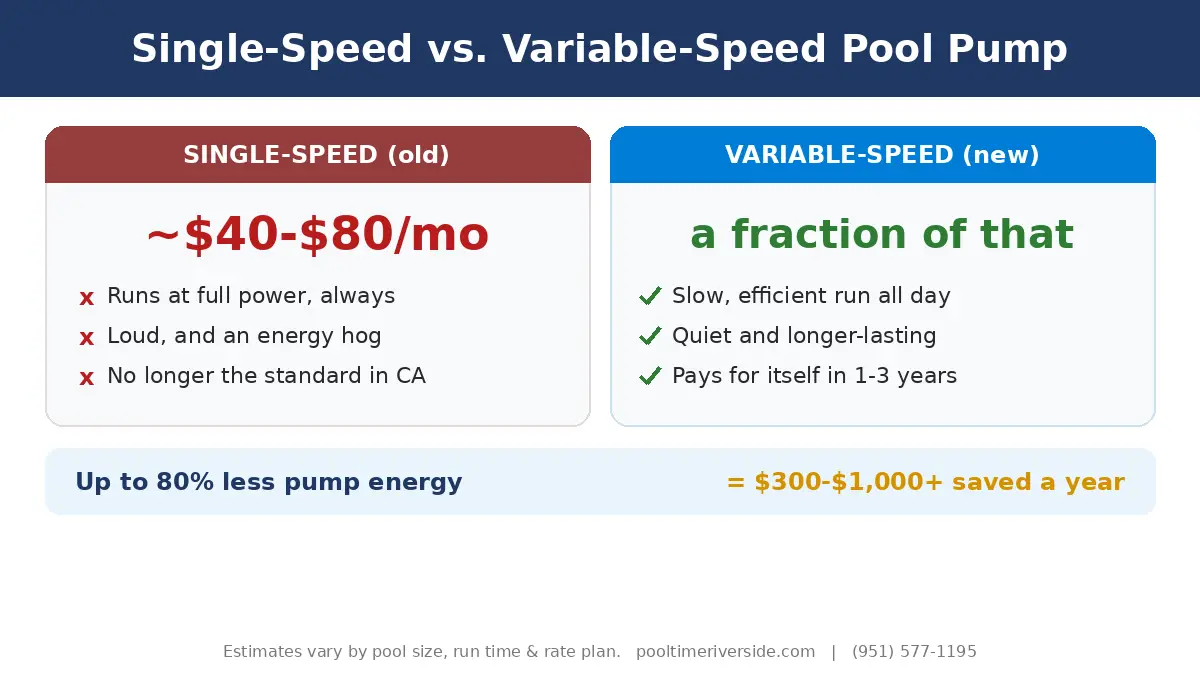
The savings come down to simple physics. A single-speed pump runs full blast whenever it is on, drawing a lot of power to push water it does not need to push that hard. A variable-speed pump slows down and runs most of the day at a low, efficient speed, which uses dramatically less electricity for the same clean water. Industry testing routinely shows variable-speed pumps cutting pump energy use by up to 80 percent or more compared with an old single-speed unit.
Put that against Southern California electric rates, which sit well above the national average, and the dollars get real. Depending on your pool size, how long you run the pump, and your rate plan, most homeowners here save on the order of a few hundred to over a thousand dollars a year. To put it another way, an old single-speed pump can quietly cost you $40 to $80 or more every month, while a variable-speed pump doing the same job might cost a small fraction of that. Those numbers are estimates rather than a promise, because every pool and rate plan is different, but the direction is always the same: the old pump is the expensive one.
Why Single-Speed Pumps Cost So Much to Run
A single-speed pump has one gear, and that gear is full power. Whether it needs to or not, it runs at maximum speed the entire time it is on, which is usually many hours a day through a Riverside summer. All that extra speed does not get your water any cleaner past a certain point. It just burns electricity, generates noise, and puts more wear on the motor.
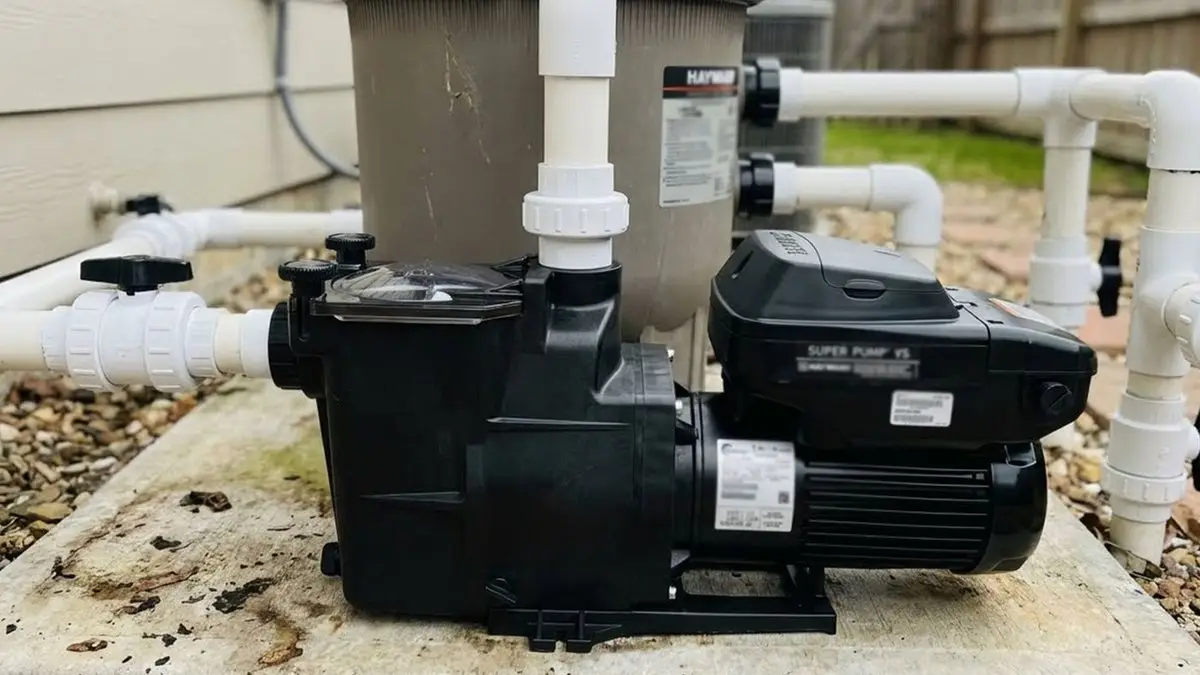
Variable-speed pumps work differently because they use a more efficient motor and let you dial the speed up or down. Water only needs to turn over slowly and steadily to stay clean, so the pump spends most of the day at a low speed that sips power, then ramps up briefly when you need more flow for cleaning or running a feature. Running longer at a lower speed uses far less energy than running short bursts at full speed, which is the whole trick behind the savings. It is also a lot quieter, which your neighbors will appreciate on those long summer run times.
Variable-Speed vs. Single-Speed vs. Two-Speed
If you are shopping or comparing quotes, here is how the three types stack up. A single-speed pump is the cheapest to buy and by far the most expensive to run, and in California it is no longer the standard replacement choice. A two-speed pump adds a low setting and helps some, but it does not come close to the efficiency or the fine control of a true variable-speed unit. A variable-speed pump costs the most up front, runs on the least electricity, is the quietest, and lasts longer because it is not slamming to full power every cycle.
For almost every Riverside homeowner, the math favors variable-speed. The higher sticker price is paid back through lower bills, usually within a couple of years, and everything after that is money in your pocket. If your current pump is on its last legs, our pool pump repair team can tell you honestly whether a repair buys you real time or whether you are better off putting that money toward a new, efficient unit.
The California Rule You Should Know
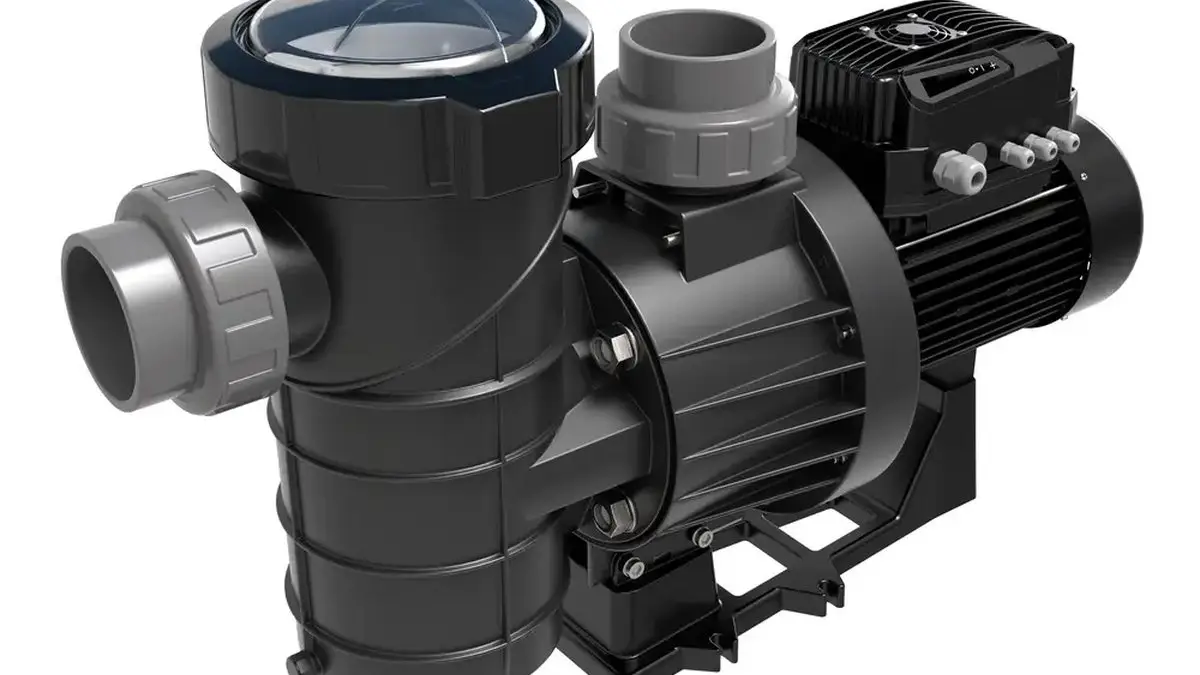
There is a practical reason so many new pumps in Riverside are variable-speed: state efficiency rules. California’s appliance efficiency standards require most new and replacement pool pumps of one horsepower and up to meet variable-speed efficiency levels. In plain terms, when your old single-speed pump finally dies, a like-for-like single-speed replacement usually is not an option anymore, and a variable-speed model is what goes in.
That sounds like a mandate, but it works in your favor. The rule pushes you toward the pump that saves you money anyway. On top of that, local utilities have at times offered rebates on qualifying variable-speed pumps, which can shave the up-front cost even further. When we quote a pool pump installation, we will let you know what is required for your setup and flag any rebate worth chasing. We handle the sizing, the install, and the programming so the pump runs efficiently from day one, and we can pair it with a matched filter if yours is due for replacement too.
How Payback Works, and When to Upgrade
Here is the way to think about payback. Take what your current pump costs to run each month, subtract the much smaller amount a variable-speed pump would cost for the same job, and that monthly difference is your savings. Divide the price of the new pump by that number and you have your rough payback time, which for most Riverside pools lands somewhere between one and three years. After that point, the pump is effectively free and still cutting your bill every month for the rest of its life, which is often longer than a single-speed pump would have lasted.
A few signs it is time to make the move. Your pump is single-speed and more than eight to ten years old. It is loud, running hot, or leaking. Your summer electric bills make you wince. Or the pump has simply failed and you are facing a replacement no matter what. If any of those sound familiar, the upgrade is usually an easy call. Keeping the water balanced and the pump running clean also matters, which is one more reason a steady weekly pool service protects the investment.
More Than Just Energy Savings
The lower power bill is the headline, but it is not the only reason to switch. A variable-speed pump runs far quieter, which is worth a lot when the pump is going for eight or ten hours during a hot Riverside stretch and your equipment pad sits near a patio or a neighbor’s yard. The gentler, longer run cycles are also easier on the whole system. Instead of slamming to full power and back, the motor ramps smoothly, so it tends to last longer and puts less stress on your filter and plumbing.
There is a water-quality upside too. Turning the water over slowly and steadily through the day gives your filter more consistent time to do its job, which often means clearer water than a single-speed pump running in short, hard bursts. And because variable-speed pumps are built for control, they pair naturally with pool automation, so you can set schedules and adjust speeds from your phone instead of walking out to the pad. Add it all up and the upgrade quietly improves the day-to-day of owning a pool, not just the bill at the end of the month.
Get a Variable-Speed Pump Installed in Riverside
A variable-speed pump is one of the few pool upgrades that genuinely pays you back, and in our high-rate market it pays back faster than almost anywhere. The key is getting the right size pump for your pool and having it programmed correctly, because a variable-speed unit set up wrong leaves savings on the table. That is the part we handle for you.
At Pool Time, we install and program variable-speed pumps from the brands you will find on Riverside equipment pads, including Hayward, Pentair, and Jandy, and we serve Riverside and the surrounding communities. Take a look at our equipment installation services or our Riverside pool service page, and we will size it, quote it, and set it up to save from the first run.
Get your free variable-speed pump quote → or call (951) 577-1195.
Variable-Speed Pool Pump FAQs (Riverside, CA)
How much does a variable-speed pool pump really save?
For most Riverside pools, a variable-speed pump saves somewhere between $300 and $1,000 a year on your pool’s share of the electric bill, sometimes more on a large pool with long run times. The exact figure depends on your pool size, how many hours you run the pump, and your rate plan, but the savings are always significant next to an old single-speed unit.
Are variable-speed pumps required in California?
Effectively, yes, for most replacements. California’s appliance efficiency standards require most new and replacement pool pumps of one horsepower and up to meet variable-speed efficiency levels, so when an old single-speed pump fails, a variable-speed model is generally what you install. The upside is that it is also the pump that saves you money.
How long until a variable-speed pump pays for itself?
For a typical Riverside pool, the payback is usually one to three years. You take the monthly savings over your old pump and divide it into the cost of the new one. Southern California’s high electric rates shorten that payback compared with most of the country, and after that point the pump keeps cutting your bill every month.
Is a variable-speed pump quieter than my old pump?
Much quieter. Because it spends most of the day running at a low speed instead of full blast, a variable-speed pump makes far less noise, which is a real bonus during long summer run times when the pump is going for many hours a day.
Can I just repair my old single-speed pump instead?
Sometimes a repair makes sense, especially if the pump is newer and the fix is minor. But on an older single-speed pump, you are often spending money to keep an energy hog alive, and California rules may steer you to a variable-speed unit at replacement anyway. We will give you the honest comparison so you are not throwing good money after bad.
What size variable-speed pump do I need?
It depends on your pool’s volume, plumbing, and any features like a spa or waterfall. An oversized pump wastes money and an undersized one will not turn the water over properly, so sizing matters. We measure your setup and match the pump to it, then program the speeds so it runs efficiently. Call (951) 577-1195 or request a free quote.